

Author: Elaine Ford
With biodiversity net gain (BNG) legislation now in force, developers and landowners are naturally preoccupied with how this impacts the development potential of their sites.
While navigating the new legislation can present another planning hurdle, it also has the potential to provide a revenue stream for land deemed unsuitable for development.
Creating biodiversity units on your land
If developers are unable to achieve the legal requirement of 10% BNG on site, they can buy ‘credits’ in new or enhanced habitats off site to satisfy their BNG obligations.
With supply of off-site biodiversity ‘units’ currently extremely limited, there is a significant opportunity for land with no development potential to generate additional income through the creation of habitats, that could add to the supply of BNG units.
Current research suggests that prices are between £20,000 per unit for areas of’ low distinctiveness’ and £100,000 per unit for areas of ‘high distinctiveness’ (this will likely vary across different parts of the country). While the credit system is complex, with multiple exceptions and variants, it is possible for 1ha of land to yield multiple biodiversity units, depending on the habitat created or enhanced. These prices will likely fluctuate over time as more sites are allocated for BNG.
Planning permission
For land with an agricultural, forestry or horticultural use designation, planning permission would not ordinarily be required to create habitats. There are exceptions, and we would recommend engaging with a planning expert if you are considering making your land available for BNG credits.
While every local authority (or other responsible body) will have its own processes, our experience is that some elements are consistently required:
Landowners will need to enter into a legal agreement with the local planning authority (LPA) to agree the habitat and ensure its management for a minimum of 30 years.
An ecology report will be required to assess the baseline of the habitat levels, both before and after any enhancements have taken place. A metric designed by DEFRA will need to be completed as part of the ecological work to demonstrate the potential of the site.
Local Plan Process
When presenting a site as a potential habitat for BNG units, the earlier you can engage with the LPA, the better.
By presenting your site during local or neighbourhood plan consultations, or in respect of a Local Nature Recovery Strategy (which is prepared separately to the local plan process) you can ensure the council has time to carefully consider it at an early stage. This benefits the council too, allowing them to ensure a sufficient supply of sites in their areas.
Early engagement also means landowners could influence the wording of any BNG specific policies, including the information which might be required to secure biodiversity units. It also means your proposals will be visible to any developers (who may need to buy BNG credits) when local plans or nature recovery strategies are published.
There are some associated costs, like those for site assessment and improvement, and professional planning and legal services. However, the revenue from BNG units could be significant.
Rather than being a drain on resources, constrained or marginal land can work more effectively; Creating BNG units is especially helpful for those with land in the green belt or areas at risk of flooding. If options for development have been ruled out due to land or planning constraints, this could be a great option for a consistent and guaranteed revenue.
SF Planning have in-house policy experts who are advising landowners and developers on the potential for their land and representing their interests to the LPA, get in touch for more information about how we can help.

Liz Shield MRTPI
SF Planning
CHECK WITH NICOLA CONTACT DETAILS ON LAST PARAGRAPH
Author: Elaine Ford
At Perry Bishop we work very closely with local, regional, and national developers and pride ourselves with our New Homes knowledge across each team.
We are proud to be one of the only Estate Agents where all customer facing staff have successfully completed and passed the ‘Understanding the Consumer Code for Home Builders’ course.
The Consumer Code for Home Builders helps agents in the industry improve quality and customer service which in turn makes the new-build home buying process fairer and more transparent for consumers.
The Code covers every stage of the home-buying process – pre-contract, exchange of contract for two years after legal completion.
The Code reinforces best practice among home builders and agents to encourage a consistently high level of information and customer service. It builds on successful efforts already made by the industry to improve consumer satisfaction in recent years.
Author: Elaine Ford
We are delighted to announce that following the owner’s decision to retire from the business, Perry Bishop has taken over the successful and well-regarded “Cirencester Sales and Lettings” business.
As part of this exciting transition, the team members Bev, Jane, and Emily have transferred to our Cirencester office.

This is a significant step in our plan for growth in our existing towns, enhancing our presence and expanding our services in the Cirencester area.
We warmly welcome our new colleagues to the Perry Bishop family and look forward to the expertise and dedication they will bring to our team.
We are excited to continue serving our new landlord clients and assisting those moving home with the high level of service and support Perry Bishop is known for.
Thank you for your continued support and trust in Perry Bishop. If you have any questions or need assistance, please do not hesitate to reach out to our Cirencester office.
Author: Elaine Ford
We understand the challenges of organising outdoor events and the need for suitable equipment to ensure success. That’s why we’re thrilled to offer our complimentary gazebo borrowing service.
Whether you are organising a school fete, charity fundraiser, a family gathering or any other outdoor event, our Gazebo (measuring 4 meters x 3.5 meters) can create an additional welcoming space.
Last year, a variety of charities, schools, and community organisations benefited from using our gazebo, helping to make their events more comfortable and enjoyable.
If you are interested in booking the gazebo, please email gazebo@perrybishop.co.uk and we will be more than happy to coordinate delivery to your event, subject to availability.
Kind Regards
Perry Bishop
Author: Elaine Ford
Are you considering selling your property but unsure of the best method? While traditional methods like private treaty sales have their advantages, selling via online bidding can offer a range of benefits that might be perfect for your situation. Here are some reasons why selling your property via online bidding could be a smart choice:
Speed: One of the most significant advantages of selling via online bidding is the speed of the process. Online bidding typically have fixed sale dates, which means you can sell your property quickly without the uncertainty of waiting for offers to come in.
This can be especially beneficial if you need to sell your property within a specific timeframe.
Transparency: Online bidding provide a transparent sales process, allowing both buyers and sellers to see the entire process unfold. Bidders can see who they are competing against and can make informed decisions based on the level of interest in the property.
This transparency can help ensure that the property sells for its true market value.
Competition: Online bidding creates a competitive environment where multiple buyers compete to secure the property. This competition can drive up the sale price, potentially resulting in a higher final selling price than you might achieve through private treaty negotiations.
With buyers actively bidding against each other, you have the opportunity to achieve the best possible price for your property.
Certainty: Selling via online bidding offers a level of certainty that private treaty sales often lack. Once the hammer falls, the sale is binding, and the buyer is legally obligated to complete the purchase.
This eliminates the risk of deals falling through at the last minute, providing peace of mind for both buyers and sellers.
Control: As the seller, you have more control over the sales process when selling via online bidding. You set the reserve price (the minimum price at which you are willing to sell), and you have the option to accept or reject the highest bid once the auction concludes.
This control allows you to dictate the terms of the sale and ensures that you are comfortable with the final outcome.
Marketing: Online bidding provides an excellent platform for marketing your property to a wide audience. Online bidding campaigns typically involve intensive marketing efforts, including online listings, print advertising, and signage, to attract potential buyers.
This exposure can generate significant interest in your property and increase the likelihood of achieving a successful sale.
Speedy Settlement: Online bidding sales often have shorter settlement periods compared to private treaty sales. This means you can finalise the sale and receive the proceeds from the sale more quickly, allowing you to move on to your next property or use the funds for other purposes sooner.
In conclusion, selling your property via online bidding offers numerous benefits, including speed, transparency, competition, certainty, control, effective marketing, and speedy settlement.
Examples of our recently sold properties via Online below:
Baunton – Sold recently at £280,000 and on market for Guide Price £250,000
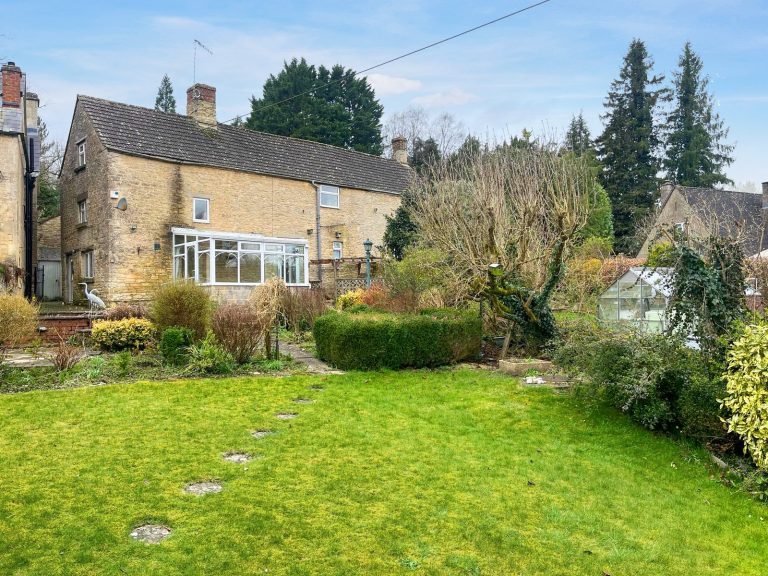
Witcombe – Sold recently for £420,000 and on market for Guide Price £350,000

If you’re looking for a fast and efficient way to sell your property while maximising its sale price, online bidding could be the ideal method for you.
Get in touch with our team today to explore your online bidding options and take the next steps toward a successful sale.
Author: Elaine Ford
You may think this is a strange topic, but lots of homeowners remain unaware of the laws regarding garden fences until they find themselves embroiled in a frustrating and costly boundary dispute. So, here you’ll find some expert advice to help you stay well-informed about your property rights and obligations as a homeowner.
With fences being central to many neighbourhood conflicts, we believe that everyone who owns a property in the Cotswolds and the Vale of the White Horse should have a better understanding of the law.
Establishing fence ownership – When trying to determine which fence is yours, the best place to begin is your deeds. You’ll find a scale plan of your property highlighting your boundary lines with a T-mark (a symbol that looks like the letter “T”) to represent the wall or fence ownership.
Sometimes, adjacent properties have joint ownership over a fence or wall (something that is referred to commonly as a party fence or wall). If that is the case, you’ll see two T symbols joined together making an H-mark (which looks like an elongated letter “H”).
Virtually every modern property deed will have clear markings for boundary ownership, but if you’re living in one of the older properties, you may find that the boundaries are less obvious. In such cases, something known as “presumptions” will come into play. It is presumed that fence posts are placed on the land belonging to the owner of the fence so the rear of the fence which has the posts showing will face their property.
Although it has been traditionally believed that you own the fence on the left-hand side of your property, you can’t guarantee that will always be the case. Checking the deeds is always the first port of call.
Who takes responsibility for garden fence maintenance? As you’d expect, the owner of the fence will usually be responsible for fence maintenance, while party fences and walls are both neighbours’ joint responsibility to maintain. It can get a little confusing if the deeds don’t indicate ownership clearly, or if they include covenants relating to the repair of the wall or fence in question. In a few cases, even documents held by the Land Registry may be misleading. If one neighbour has taken responsibility for maintaining a fence for an extended period of time, they may have become legally responsible for its upkeep.
Am I legally allowed to force my neighbour to make repairs to the fence? There are no laws that require anyone to repair fences, even when they’re in extremely poor condition, so essentially, you can’t legally force your neighbour to carry out repairs. You may find it best to leave the fence in place and simply erect another for yourself on your own land in such a situation.
What do I need to know if I’m erecting a fence? If the property deeds indicate that a fence is your responsibility, then you are responsible for erecting a new fence. If it is a party fence, both neighbours must take responsibility.
A garden fence height may be determined by your local authority, but in most cases, it must be no more than 2 metres high to be permitted with no planning permission required. If the property is a listed building, planning permission will probably be needed, as will any fence that is over 1m in height and adjoining a public road.
Restrictions will typically apply to any property with a front open to public paths or highways. Therefore, consulting with the local authority before commencing work is a good idea.
Are you considering a move, give our experienced team a call to register for a suitable property to purchase or arrange for a valuation of your existing home. Click here for contact details.
Author: Elaine Ford
You might be wondering, ‘why buy a rental property in the Cotswolds and the Vale of the White Horse? After all, the global landscape is treading on eggshells at the moment, with a new event seemingly occurring every week.
However, all the findings suggest that now is a great time to invest in a rental home and enjoy the financial benefits of being a landlord that comes with it.
Are you considering investing in a buy-to-let property?
9 Reasons why you should consider an Investment Property
There are many benefits to owning property. Whether you’re just toying with the idea of becoming a landlord or completely sold on the idea, here are nine good reasons to invest in a rental property right now.
Its a tangible investment – It’s never too early (or late) to invest in the future. Rental property in the Cotswolds and the Vale of the White Horse is appealing to many since it’s a tangible investment and one that’s relatively familiar and easy to understand. For many, it’s also a far more accessible investment compared to bonds, stocks or shares that require some market skill and know-how for capital growth.
The market for renting – From students to relocated workers and families to couples, the rental market in the Cotswolds and the Vale of the White Horse is vast and varied. An English Housing Survey revealed that one in five households in the UK is a rented home. With this in mind, you will always find demand for your buy-to-let property, given property prices for purchasing a home are not attainable for many.
An annual income – Of course, one of the benefits of being a landlord is the potential annual income that comes with it. This varies depending on the size, condition, and location of your property. However, there’s much appeal! Latest data from the Landlord’s Guild states that the average median annual income is £17,200 a year in rent before tax and deductions. For some, this could make the difference of being able to go part-time in their job or retire early. For others, it is an excellent way to top up their salary.
A guaranteed income – There’s no denying that there are certain stresses that come with owning a rental property. However, many will agree that the benefits of being a landlord far outweigh this. One of these benefits is some guarantee of a regular income.
Most rental contracts are for 12 months in duration. This offers landlords some peace of mind in terms of a regular monthly payment. Some might say, even more security than a full-time job offers.
Grow your portfolio – Many individuals who start with just one buy-to-rent property in the Cotswolds and the Vale of the White Horse find that it’s a viable business. This offers a foray into the property industry, growing your portfolio as you acquire more properties. This can be a great career choice, especially for those with an interest in the property market and business investments.
A second home – Some private landlords invest in buy-to-let property as a future nest egg for themselves that covers the mortgage rates until they are ready to move in.
This is not just in terms of financial gain, but also as a retirement home. As part of a long-term strategy, you may decide to invest in a second home to rent now, which you will later take off the market to live in yourself.
You’ll also have the added benefit of knowing the property has been in good hands in an area you’re already familiar with before moving in.
Support – Even if you’re new to the buy-to-let market, there’s plenty of support in the industry. This includes the Residential Landlords Association who represent and assist its members.
Support your family – One of the benefits of owning property is the opportunity to provide security for your family. If you have children at university, this will be an all-too-familiar scenario! Many families turn to buy-to-let properties to ensure their children have a stable residence during their higher education. This can still be rented out beyond their tenancy, making it a handy side hustle later on.
Expand your knowledge – Whether you already own a property or you’re looking for a buy-to-let for the first time, you will undoubtedly expand your knowledge along the way. From learning the lingo to understanding lending rates and regulations around being a responsible landlord. It’s a great chance to grow in ways you might not have previously considered.
We understand there’s a lot to consider when buying a rental property, so we’ve answered your most common questions here.
Frequently asked questions about why you should buy a rental property in The Cotswolds and the Vale of White Horse
Why should I consider purchasing rental properties? Investing in rental properties can provide a steady stream of rental income, allowing you to build wealth over time. The annual rental income generated can not only cover mortgage payments but also offer potential profits, making it a lucrative long-term investment.
How do rental properties help with mortgage payments? Rental income from your property can be used to cover mortgage payments, reducing your financial burden and potentially creating positive cash flow. This dual benefit of property appreciation and annual rental income ensures that your investment contributes to both short-term affordability and long-term financial growth.
Are there tax advantages for rental property owners? Yes, rental property owners may enjoy tax advantages such as deductions on mortgage interest payments, property maintenance costs, and depreciation. Understanding these tax benefits can significantly impact your overall return on investment and provide additional incentives for individuals considering the purchase of rental properties.
How do rental properties help mitigate capital gains tax? Owning rental properties allows for potential tax advantages when selling. Rental property owners can defer capital gains taxes by reinvesting the proceeds from the sale into another qualifying property. This flexibility in managing capital gains tax makes rental properties an attractive option for investors seeking to optimize their financial portfolios.
Need Help Getting Started? For no-obligation advice on buying a rental property in the Cotswolds and the Vale of the White Horse please contact our expert property team.
Author: Elaine Ford
Knowing when to sell your home is tricky. Every homeowner wants to do what is best for their family and get the most profit from their property. So when is the best time to sell your home?
When You Are Ready
This might at first seem obvious!
However, many sellers get caught up in putting their homes on the market at the ‘optimum time’ rather than when their family is ready.
Although moving in the summer months is often deemed unfavourable, it might be the only realistic opportunity for young families. Trying to force a move when the timing is not ideal for your personal circumstances can be catastrophic.
Additionally, there is a considerable amount of work involved with preparing the home for sale. Before the property can be photographed and viewed, a substantial declutter and a thorough clean will be necessary. You might also be required to redecorate, adding a more neutral colour palette to the home so it appeals to the broadest possible market.
Shifting Trends
Ten years ago, advising a client on the best time to market their home would be straightforward.
Spring was always the best, with Easter routinely ranking as the busiest week for home sales. Conversely, Christmas was the worst, with buyers deciding to stay put and begin their home search in the new year.
However, the housing market has changed dramatically. Video viewings offer more flexibility and buyers are now often willing to move at previously ‘unfavourable’ times.
Spring
Spring is still the most popular time to buy and sell properties. Most of us are inspired by the new season and eager for a fresh start in a new home.
Completing a sale in spring allows us to reap the rewards of the summertime in our new property.
Summer
Selling your home in summer allows you to show it in the best light. The house will photograph fantastically, and prospective buyers will enjoy the late evening viewings with natural light.
Houses aimed at young couples and the elderly often perform better in the summer months, with families often preoccupied with the school holidays.
Autumn
Autumn offers an excellent opportunity to buy a new home and be settled before Christmas.
When marketing your house in the autumn, be sure to make the property warm and inviting, showing viewers just how fabulous and cosy winter in their new home can be.
Winter
For years, winter has been considered the most tricky time to sell your home.
The market tends to slow in the middle of October, with buyers accepting they will spend the festive period in their current property.
However, the massive benefit of selling in the winter is that you will face much less competition. Meaning, determined buyers are more likely to land on your home than they might have been in the more competitive spring or summer months.
Focus on Supply and Demand
Before contemplating putting your home up for sale, consider your target market.
If you have a two-bedroom property, you will most likely be appealing to young couples. They might be more flexible with move dates, especially if they do not have children.
Conversely, if you are looking to sell a bungalow, it will likely appeal to older people and those looking to downsize after children have flown the nest. These clients may be more reluctant to deal with the hassle of moving in the winter, and therefore a spring or summer completion will be ideal.
The current economic situation
The housing market is known for its fluctuations. However, it continues to bounce back following any adversity despite challenges in the economy.
It is crucial sellers consider incentives such as the 5% mortgage deposit scheme, which will encourage buyers at less favourable times of the year.
Area changes
Buyers aren’t just viewing your particular home; they are assessing the area.
So considering any dramatic changes planned for the town may make a huge difference to the best time for you to sell.
For example, if a great new primary school is in the pipeline, it may be worth holding out on advertising the home.
Excellent schools drastically increase the price of homes, and it will also widen your target market.
On the other hand, something may be planned that will reduce the price of your home. If this is the case, it might be worthwhile moving more quickly, even if this means advertising the house in a less popular season.
Ready to move? Give us a call and arrange for one of our friendly and experienced team to come and give you a value on your property and chat to you about your move.
Author: Elaine Ford
When it comes to selling your home in the Cotswolds and the Vale of the White Horse, there’s a lot of overwhelming information and old wives tales out there, and it can sometimes be difficult separating the fact from the fiction.
Advice often comes from well-meaning friends or family members who are just trying to be helpful, but in reality, they are not property experts!
Our team at Perry Bishop are all experienced property professionals with many years of experience between us. So, to ensure you are in possession of the correct information, here are seven home selling myths you’re likely to hear and why they’re not to be believed.
Overpricing your home will lead to better offers Unfortunately many sellers believe that by overpricing their house to start with, it leaves more room for negotiation and ultimately a better offer. That’s why we often see sellers marketing their properties with the agent who has simply come in with the highest valuation!
However, this is entirely false.
When buyers are looking at properties, they’ll search within their price range. If your property price has been inflated, then it’s going to be competing against other properties that appear to be far better value for money, rather than sitting in the price bracket it should be in! This potentially means it will sit on the market for longer.
Buyers whose budget doesn’t stretch to the higher price range will miss out on seeing your property altogether as they’re not even looking in that price bracket.
You’ll attract more offers and sell your property more quickly if it’s been priced fairly. It gives it a chance to stand out among other properties in its price range, rather than being a poor relation in the higher price category. And you’re more likely to see interested parties competing upwards rather than knocking you down.
Click here if you would like to arrange for one of our experienced team to come and discuss the value of your home or you would like to find out an approximate on-line valuation.
Getting an immediate offer means it’s priced too low If you’ve resisted the urge to overprice your home and an offer comes in straight away, it’s tempting to think that you’ve missed a trick by not marketing it at a higher price. After all, if you had done, then you’d be a few thousand pounds better off surely.
Again, this is false. Most buyers scour the market for a couple of months, waiting for the perfect property to come up, and there’s a good chance that they’ve jumped in immediately to avoid missing out.
Remember too that if you’d overpriced it, there’s a chance they wouldn’t have found it in the first place.
A better offer will come along if you wait This is another all too familiar trap that sellers fall into. After all, if you’ve had an offer on the very same day your home has gone on sale, then surely there’s likely to be a whole queue of buyers lining up for it?
No, not necessarily. You might just have been lucky enough to have the right buyer come along at the right time. If you receive a fair offer, then it’s usually best to accept it whether your property has been on the market for hours, days , weeks or months.
The Estate Agent Wwith the lowest commission is the best option While you’ll naturally want to earn as much money from your property sale as possible, it doesn’t mean you should sign a contract with the estate agent who offers the cheapest fees.
Selling a property can be a very stressful process. A good estate agent will help make it run as smoothly as possible while communicating effectively and providing outstanding service, so it’s crucial you weigh up what’s included in their fee.
Although it’s tempting to cut costs as much as possible in the short term, you might come to regret it over the longer term, especially if your property isn’t selling.
Major renovations will offer the biggest return on investment Many homeowners are under the impression that if they spend a few thousand pounds on a conservatory, a swimming pool or a landscaped garden, they’ll just be able to add the cost of it to the house when they come to sell.
Sadly, it’s not quite as simple as this. Not all buyers will want to maintain a pool or require the space that a conservatory ultimately takes away from their garden, for example. Many buyers prefer to start with a blank canvas too, so they can add their own renovations.
That’s not to say that a major renovation is a bad idea, but if you’re only doing it to see a return when you come to sell, then it might be worth considering the type of renovation or extension that will bring you the best returns.
It’s not worth fixing the house up at all If you’ve decided to sell your property, it’s understandable that you won’t be thinking about spending even more money on it. After all, it won’t be you seeing the benefits long-term.
This logic is flawed, though, and it could cost you when it comes to getting the full asking price. A property that’s well maintained and looked after is far more appealing to buyers. Fixing broken fences and gates, tidying the garden, replacing broken windows or doors and giving any tired rooms a fresh lick of paint will go a long way towards selling your property for its true value.









Online valuations are 100% accurate Online valuations are a fantastic tool and we are most definitely in favour!
However, a quick online valuation of your property should be used as a guide. Online tools don’t always take into account the condition of a property or the extra value you may have added. They’re simply using other similar sized and types of properties in your area as a guideline.
The best way to get your property valued is always to contact an experienced, local estate agent who will come and value your property in person.
Don’t hesitate to get in touch with our friendly and experienced team to book a valuation for your property today or click here to book in a time and date to suit yourself or carry out a quick on-line valuation.
Author: Elaine Ford
A new Leasehold and Freehold Reform Bill is working its way through the UK Parliament.
The proposed legislation aims to address criticisms that the current system is unfair to homeowners by banning the sale of new leasehold houses and creating a standard 990-year lease length for most apartment owners.
It would also streamline the extension process to be simpler and cheaper while restricting ground rents on new leases to zero cost.
The Bill has cross-party political backing, with some stating it represents the most significant leasehold reforms in decades that could save homeowners money if implemented.
The practical impact, however, depends on the Bill successfully passing through the full legislative process. As the scope could change, and no timeline is defined for the measures to take effect if approved into law.
With that in mind, here’s your guide to everything that’s currently going on with the Leasehold and Freehold Reform Bill.
What is The Leasehold and Freehold Reform Bill?
The Leasehold and Freehold Reform Bill targets key areas for housing changes. And aims to alleviate financial and legal burdens for homeowners stuck with outdated housing contracts.
The end of leasehold houses
It prohibits the selling of new leasehold houses. Ending a practice where house buyers still did not own their homes after paying off mortgages. Instead, freeholds will now be offered for all new houses.
Changes to existing leasehold houses
For existing leasehold houses, the reforms make it easier for owners to voluntarily extend leases to 990 years. With zero ground rents, essentially turning them into freehold equivalents.
New rules for flats
On flats, the Bill gives leaseholders the power to extend leases more easily and challenge unfair contract terms or costs imposed by freeholders. It also facilitates buying a share of freehold in apartment blocks without needing majority consensus.
If passed into law, these steps will curb exploitative charges in an area where costs have frequently spiralled out of control. While it won’t eliminate all leasehold problems overnight, it lays the legislative foundations to restore more balance.
The Leasehold and Freehold Reform Bill at a glance
There’s a fair bit packed into the Leasehold and Reform Bill. So, let’s break down the most important points and what they entail.
The bill plans to:
- Make it cheaper and easier to extend your lease or buy the freehold for existing leaseholders in houses and flats.
- Increase the standard lease extension term from 90 years to 990 years for houses and flats, with ground rent reduced to £0.
- Remove the two-year ownership requirement before leaseholders can benefit from reforms.
- Ban new leasehold houses in England and Wales – but not leaseholds on new flats.Make buying or selling a leasehold property quicker and easier by capping time and fees for information provision.
- Require transparency over leaseholders’ service charges.
- Replace building insurance commissions with transparent admin fees.Extend access to redress schemes for leaseholders to challenge poor practice.
- Scrap presumption for leaseholders to pay freeholders’ legal costs when challenging poor practice.Grant freehold homeowners on private and mixed tenure estates the same redress rights as leaseholders.
- Ensure freeholders and developers can’t escape funding remediation work.
- Allow leaseholders in buildings with up to 50% non-residential floorspace to buy their freehold or take over its management.
Is this leasehold reform new?
Concern about the leasehold system isn’t new news. There were commitments and pledges to overhaul it in the 1980s, but meaningful action failed to materialise.
A lack of action led to an increasing number of homeowners feeling trapped. Paying high fees for homes they would never technically call their own. But after decades of empty promises, the leasehold scandal came to a head in 2017 when the problems made front-page headlines.
Leasehold reform is a component of housing policy and is something our friends at Propertymark have campaigned on for several years now. Their research paper of 2018 ‘Leasehold: A Life Sentence’ highlighted a lot of leasehold issues.
Fast-forward to 2024, and mounting public pressure looks like it’s about to effect change. And we’re seeing a concerted effort to rectify problems with the Leasehold and Freehold Reform Bill.
When will the Leasehold and Freehold Reform Bill come into effect?
The Leasehold and Freehold Reform Bill was introduced in the House of Commons on November 27th, 2023, as part of the legislative agenda outlined in the King’s Speech.
While the Bill sets out proposals to overhaul leasehold rules, the scope and timing of these reforms face uncertainty as the legislation navigates Parliament. There is currently no defined timeline for when the bill might receive Royal Assent to become law.
Additionally, details are pending on when each specific reform would take effect if approved. As well as the possibility of initial measures being amended during parliamentary procedure.
The practical impact relies on sustained momentum to successfully translate announcements into legally binding changes. Which could meet roadblocks before enhancements materialise for existing homeowners.
Should I extend my lease now or wait?
For existing leaseholders considering extending their lease, the best move will likely be to proceed ahead of the reforms being finalised. Despite the legislative momentum, successfully turning the bill into law will not be quick.
Having extra years on your lease guarantees more protection if other aspects like ground rent reduction don’t come to fruition.
Selling your home?
If you’re looking to sell a property, freehold or leasehold, contact our experienced team today by clicking here
If you would like to learn more about lease extensions and what is involved at present, please contact Ian Perry
Content courtesy of Phil Spencer – Last Updated: January 24th, 2024
We partner with…