
Author: twentytwo
Being energy efficient impacts simple actions like switching on a light, opening a fridge or heating water. Read these top tips from heating experts, Hometree, for becoming energy efficient in 2019.
1. Replace your traditional boiler with an energy efficient boiler:
We often like to forget about our boiler and hide it away in a cupboard, which is why we find it so distressing when our boiler is on the blink and needs to be replaced. It is, after all, one of the most important items in your home, bringing you heat, comfort and hot running water.
If you replace your old boiler with an energy-efficient boiler with Hometree, the boiler and installation costs are often compensated by the savings you make thanks to your new, more energy efficient boiler. This is really important since roughly half of what you spend on energy every year is down to your boiler. Hometree recommends installing an A++-rated boiler for efficiency.
Simon Phelan, CEO and Founder at Hometree, the online boiler installation company said: “A distressed consumer called us this week with a broken down boiler that had a seasonal efficiency of 65%. She had been paying for British Gas homecare cover since she moved into the property around 30 years ago. One of our Gas Safe Engineers installed her new boiler fitted within a few days (before Christmas) with a Worcester Bosch Greenstar 25i (95% seasonal efficiency). On the Hometree 10-year finance plan, the boiler will cost the client £30 per month (9.9% APR) with no deposit. By changing the boiler to an energy efficient model with a 10-year warranty, the customer will make 30% savings on her hot water and heating bills, the new boiler is paying for more than its own cost, not to mention the savings from cancelling her £20 per month British Gas boiler care”
2. Ensure you are using a smart thermostat:
Smart thermostats allow you to manage your heating controls remotely from your computer, tablet or smartphone and include sophisticated features like learning your heating routine, advising you on the best times to put your heating on, informing you on energy efficiency and even using your location (leaving or nearing your home) to automatically turn your heating on or off. Smart thermostats help keep your home at an ambient temperature, which is the best way to keep your home warm without wasting money.
3. Replace Incandescent Bulbs:
Incandescent bulbs stopped being produced to some extent back in 2014 and continue to be phased out to save the planet and save homeowners money.
Halogen bulbs, compact fluorescent lamps (CFLs) and light-emitting diode (LED) bulbs will provide your home with long-lasting light and are more energy-efficient than the outdated incandescent bulbs. Since the average home uses 40 bulbs, switching over your bulbs could save you a bundle on your electrical bill.
4. Try washing your clothes at a lower temperature:
Simply playing around with the time and temperature settings on your washing machine could impact your carbon footprint as well as your spend on energy bills. If you wash a full load of your clothes on the lowest possible temperature (a cold wash if possible), select the shortest cycle and use a high spin to save tumble drying, you could be onto a winner. If the items are heavily soiled, football kits etc, try soaking first – there are also a number of detergent brands now who focus their products on working well at lower temperatures.
5. Are you using your electrical appliances efficiently?
The average UK household has 40-50 electrical appliances. There are many ways you can save money and increase efficiency with some changes in 2019, such as:
Don’t completely pack your fridge full of food and make sure there is plenty of ventilation (i.e. no dust gathering at the back)
Ensure that you only fill the kettle with the water you plan to use
Switch your TV standby mode off
Turn lights off when you leave a room
Whenever buying any new appliances, take their energy efficiency into consideration by checking online.
These all impact your electric bill and your carbon footprint and are easy changes to make, so why don’t get started today?
Author: twentytwo
Building an extension can be a tricky balancing act between creating a space you love and sticking to a tight budget. However, with some careful planning, you can achieve both. Follow these essential tips from three experts to avoid spiralling costs on your project.
Professional advice from: Georgie Noone of Complete Home Development; Leena Tulsidas of Build Team; Katie McPhilimey of Probuild360
Plan ahead
“Careful planning is key to controlling costs,” says Katie McPhilimey. “It prevents unnecessary expense further down the line.
“Pay particular attention to mechanical and electrical planning, such as where power outlets and sockets go,” she says. “The cost of moving these around later on in the development often catches people out – and can quickly escalate.”
Set your own costs
Georgie Noone recommends you establish your own budget right from the start. “It sounds simple,” she says, “but going into a project with a realistic and affordable self-budget will make everything else that follows easier.”
Allocate budgets
“Be very clear in your contractual agreement exactly how much is being allocated to every aspect of the project,” Katie advises. “Even if you haven’t yet chosen the worktop, for example, allocate a budget for it.
“This not only keeps you focused on your total spend,” she says, “it also helps prevent you from using the money elsewhere – it’s spoken for.”
Georgie agrees and says, “Once you’ve employed your design and build professional, the exact budget for your project needs to be agreed, in writing.
“You should be given a full breakdown of costs relating to this budget, as well as a schedule of works, so you know how the project will be run and within what timeframe,” she says. “Once a contract is in place, the design and build professional has to deliver the project on budget and on time.”
Communicate clearly
Georgie stresses the importance of communication throughout your extension project. “In my opinion, this is the most crucial point,” she says. “Communication needs to be open and transparent. You want to understand every step, and any potential unavoidable deviations from the original plan.”
If you’ve employed a project manager, they need to “clearly understand your thought process and react to your changing needs,” she adds. “Any changes normally impact on the budget, so they need to be discussed and agreed in writing.”
Her advice is to be proactive and inquisitive throughout your project. “Check in frequently, and don’t be afraid to question things,” she says. “This is your extension.”
Don’t overextend
We often think bigger is better when planning an extension, but our experts advise caution if you want to stay on budget. “It’s important not to overextend and blow your entire budget on the biggest extension,” Leena Tulsidas says. “You also want to ensure the costs don’t outweigh the profit gained when selling.”
She recommends you think about maximising your existing space, too. “While extending your property, you should also consider how the rest of your ground floor will be used,” she says. “If you’re likely to be left with unused space, you may want to think about how you can use that area efficiently and incorporate it into your extension.”
Consider the structure
Leena points out that both the size and design of your extension can impact on structural costs. “If you’re building a large or long extension, you may require much larger steel beams to provide the necessary support. The larger the beams get, the larger the costs,” she says.
“Speak with your designer or structural engineer to see whether there’s a solution that uses shorter steels, or doesn’t require as many,” she advises. “You can keep this in mind right from the get-go when designing your new space.”
Choose wisely
A smart way to stay on budget is to think carefully about which elements you want to spend more on. “There are ways of compromising without necessarily appearing to compromise,” says Katie.
“For example, you could select a simple, cheaper kitchen cupboard but choose not to compromise on your worksurface, as this will help deliver the wow factor you want,” she says.
“Trust me,” she adds, “if the worktop is impactful, no one will even notice the cupboard, which is essentially a box below it.”
Work out your windows
Glazing is another area where you can compromise. “This can be an expensive aspect of the build, so use a mixture of aluminium and uPVC cleverly,”Katie advises. “Bifold doors over a certain size should be aluminium, but windows can be uPVC to keep costs in hand.”
Leena agrees and says, “It’s key to be realistic with your budget, as glass is more expensive than traditional materials, such as bricks and blockwork, especially when working with large, bespoke sizes.
“If you’re trying to maximise the amount of glazing while keeping the costs down,” she adds, “look into openings and skylights that come in standard sizes. You’d be surprised at the effect a large roof window can have on your room, and, if finished well, it certainly doesn’t have to look like the budget option.”
Author: twentytwo
As Christmas fades and the coldest winter months are ahead of us, it is more important now than ever to be proactive in maintaining your property to avoid extra costs during winter. From water damage to freezing pipes, winter months present a whole host of potential problems for your home. We’ve listed our top four tips for caring for your property this winter.
Check the gutters
Maintaining the gutters of your home is of paramount importance during winter months. Clogged or leaky gutters can cause a leaky roof, and can even lead to water damage inside your property. Gutters should be maintained throughout the autumn as leaves fall, but if maintenance is something that slipped to the back of your list, go check them immediately.
After clearing any debris that has clogged the gutters, inspect them carefully to make sure that water flows easily. Cracks or dents may seem minor, but they can have a tremendous impact on the way that water is routed around your house, so be sure to make relevant improvements as soon as possible.
Be conscious of your windows
Windows are the bane of a home owner’s existence during the winter due to the many different types of problems they can develop. During the winter months, homeowners should keep a careful eye on windows. Check for signs of a draft (standing close to the windows and feeling cool air is a tried and true indicator, as is a skyrocketing heating bill). However, sometimes it is the very windows themselves that present the biggest problem. Condensation that develops on windows can seep into wooden panes, resulting in rot, mould, and complete window replacement in the worst cases. As a homeowner, you can combat this kind of damage by wiping windows that have developed condensation. Constant maintenance is the secret to keeping windows efficient, so don’t rush to double-glaze: only 10% of heating is lost through windows.
Weatherproof your pipes
A burst pipe is an expensive headache for a homeowner. Pipes burst when the water inside them freezes and expands. Homeowners can combat this by wrapping insulation around external pipes, or simply keeping the heating on a very low setting when they are away on holiday. If the pipes are never able to get cold enough to freeze, a burst pipe is nearly impossible.
Add insulation
New insulation won’t just take pounds off your electric bill, it will add value to your property through a higher EPC rating. Nearly 35% of heating is lost through walls, so keep an eye on your electric bill. If you notice that the bill is creeping up steadily or suddenly skyrockets, it may be time to add new insulation to your home. Consider insulating your loft for the most cost-effective solution.
Author: twentytwo
Perry Bishop and Chambers’ new Lettings and management service has got off to a flying start and our 3 Month Free Management offer is proving popular both with existing landlords looking to transfer management of their portfolio as well as those who have just invested in their first buy-to-let property.
November 2018 saw the exciting launch of this new service across our 5 Gloucestershire branches; Cheltenham, Cirencester, Stroud, Nailsworth and Tetbury and the last few months have proved to be very busy. We have listed various properties within all price ranges and we are delighted to report the successful lets of the majority of these listings, with tenants already moved in. Demand for property in the rental sector is strong and with correct marketing advice, the use of the latest and best technology, professional photography, floor plans and regular landlord/tenant feedback as standard, we are extremely confident of achieving the best rental yield and timescale for our landlords.
We are very pleased with the positive feedback we have already received from both landlords and tenants. Our experienced and professional lettings team, managed by Tammy Powell, work extremely hard every day to deliver our goal of providing a first-class service to both landlords and tenants alike. Tammy and her team are on hand to advise and guide you through the recent and impending legislation changes and their impact on the lettings industry.
If you are a landlord and you too would like to benefit from our superior marketing and award-winning customer service, we very much look forward to having the opportunity to tell you more about our refreshing approach. We would also welcome the chance to meet with you and offer an up to date valuation of your property/portfolio and talk through our different and exciting service levels.
Please call your local office to arrange an appraisal;
Cheltenham 01242 246980
Cirencester 01285 655355
Stroud 01453 762306
Nailsworth 01453 836736
Tetbury 01666 504418
First year of Mortgage Interest Relief cuts to kick in:
If previous years are anything to go by, as the 31 January deadline looms, landlords across the country will be frantically preparing to file their self-assessment tax returns for the 2017-2018 tax period. Landlords have previously been able to claim 100% Mortgage Interest Relief (MIR) for rental properties, but this year that has been reduced to just 75% with the remaining 25% of mortgage interest qualifying for 20% tax credit, as the new regime kicks in. The phased reduction, over four years, will see MIR disappear completely by 2020, with 100% of mortgage interest instead qualifying for 20% tax credit.
The change will push some landlords with buy-to-let mortgages up a tax band, despite their income not increasing, as tax will be applied to turnover rather than profit.
All tax returns filed online must be submitted by midnight on 31 January. This payment will be half of the previous year’s tax bill, with the other half due by 31 July. If landlords miss this deadline a penalty will be charged, even if they have no tax to pay or have already paid all of the tax they owe. Furthermore if they are late on making a payment, they will be charged interest by HMRC.
For more detailed information on completing a self-assessment tax return, including deadlines and penalties, please visit the GOV.UK website.
Author: twentytwo
There was a time before 1973, the year of the UK’s first big property boom, when houses and flats were seen as investments, but hardly as commodities. They were mostly regarded as homes that would be paid for by the time their owners retired – providing security in later years and perhaps even the means to move to a bungalow by the coast.
In the four decades since that first boom, attitudes and expectations have altered a great deal. Retirees are now as likely to want a modern, city centre, lock-and-leave apartment as a seaside bungalow.
The housing market has changed also. It has become big business. The post-war generation, the baby boomers, have profited greatly from the waves of boom and bust that followed that first housing bubble. It is hard to envision the subsequent generations taking as much from the property market as their parents. But of course, in property, one never really knows.
So where will it go from here? What does the New Year hold in store? Certainly those in the property industry are very unsure. The elephant in the room is, of course, Brexit. Nobody can quite know how this national tumult will affect the property market – or any other markets for that matter.
What we do know is that large numbers of professional landlords are bailing out of the buy-to let sector – deterred less by Brexit than by increased taxation and legislation. Fortunately first time buyers can now benefit from motivated sellers and more choice in a time of low interest rates and high employment.
Estate agents also know that sellers have a choice. They have a choice of which agent to turn to when it comes to selling. So sellers can expect better service and transparency in future. Over the past few years a number of high-spending online agents have been tempting sellers with extra low fees and a method of-up front payment that promises big results for little cost. We are learning, through plummeting shares and company failures in this sector, that if it sounds too good to be true it probably is too good to be true. At this time of year we are reminded that all that glistens is not gold. The enticingly wrapped socks at Christmas are still socks.
So if you are thinking about moving in 2019 you have choices. Consider them wisely. But also recognise that this is an extraordinary time. Nothing is certain. Don’t bank on the killer sale. Do aim for a great purchase. Be realistic. Price, price, price is as important as location, location, location. Don’t put your biggest asset in the hands of the inexperienced. Finally, remember the name of the game is moving: selling and/or buying is just a part of that bigger picture.
Nobody quite knows where he or she is in this Brexit year. But at least everyone should know where they want to be – and use an established, professional estate agent to help get them there.
Author: twentytwo
“When is the best time for me to sell my home?” This is a question we are often asked, and the answer might surprise you!
It is a popular misconception that Easter is the best time to sell. Thirty years ago this was the best time as there were more buyers searching in the spring. But times have changed and now Easter is often when families take a holiday while it is cheaper and more affordable than the school summer holiday period.
 Should you wait until the summer, when the garden looks at its best? This can often be a good time to showcase your home in its entirety, but that doesn’t make it the best time to sell for you personally. In fact, if you wait for the busiest time in the market, you will have more competition. There will be more property available for your buyers to choose from, giving them more bargaining power over price.
I often hear home owners say – “my garden does not look at its best in the winter”. But have they have stopped to consider that very few gardens look their best at this time of the year?
 You may be upsizing to a larger home to accommodate a growing family, downsizing because the garden is too large, and your home is becoming too costly, you may need to release capital and pay off the mortgage, or a job move is taking you to a different location. Whatever the reason, there is no right time to sell other than your personal timescales connected to the real reason for you moving.
We will spend time understanding the reason for your move, what lies behind your decision, and then understanding what is most important to you – the price you achieve, or the timescales for moving. We can then tailor a marketing strategy to suit your circumstances whether this is in winter, spring, summer or autumn.
 And what about Brexit? How will this affect the property market and your sale? Our experience has seen us through many recessions and re-aligning of property prices, so we don’t focus on the negatives, but provide you with the solution to get you moved to where you need to be. We choose not to take part in the scare mongering that the media love to portray. Instead we focus our energy on giving you the best advice for the market conditions, whatever they may be, and tailor that to your personal needs.
Brexit or no Brexit, Perry Bishop & Chambers have moved 46 more homeowners and their families in the first ten months of 2018 compared to 2017.
Don’t wait for Easter, or the summer, or for Brexit. If you are thinking of selling, or know someone who is, ask them to get in touch for a free, without obligation consultation and advice. We are experienced negotiators and will help to move you onto the next chapter of your life.
Author: twentytwo
January is traditionally a busy time for estate agents as many home owners make the decision to sell their homes. The Christmas holidays is often the only time that couples get to spend time together other than their family holiday, and it is often the time when they decide their home is too small, or too big and start to plan their next move.
But should you wait until January to contact your agent? The answer is no! This is the reason why:
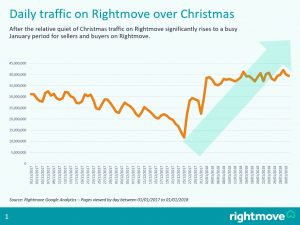
Taken advantage of the surge in traffic on property portals:
Traffic to the property portals starts to rise from Boxing Day and peaks throughout January. If you want your home to be seen by as many buyers as possible, ask your agent to upload it to the property portals (Rightmove, Onthemarket.com and Zoopla) on the last working day before Christmas.

Once the Christmas pudding is finished and the presents tidied away, thousands of home owners will be playing with their new smart phone, tablet or laptop and the property websites are a popular destination.
Get the best photographs before your tree goes up!
A good agent will be wanting to instruct a professional photographer to provide the very best images of your home and to enhance your chances of attracting the best buyers and the most enquiries. Christmas trees, tinsel and fairy lights are great in December, but will make your property appear stale in January, February and March.
So why not plan ahead, ask your agent to prepare your property particulars in advance, before you bring in the Christmas tree, and be ready to launch over Christmas week.
Get a head start on your competition and you could be in your new home by Easter!
Call Perry Bishop and Chambers now to get the ball rolling.
Merry Christmas!
Author: twentytwo
We often think of Spring as being the best time to sell a home. Many families consider a move just after Christmas when they realise they have outgrown the space they are living in.
Conversations between couples may result in them considering a downsize to release capital helping to boost their pension, or to spend on free time after retirement. Not all these buyers will see their plans through to fruition and we are left dealing with high volumes of enquires, but not always the best quality leads.
However, the Autumn brings us perfect conditions within which to sell:
- Quality applicants and enquiries rather than quantity, giving us more time to spend with each one to focus on their motivation, ability and needs.

- Buyers will want to move in before Christmas, keeping them driven and motivated.
- With the schools starting back parents are also in the mood for a new start which may mean a new home.
- Cooler weather means spending more time at home and recognising the need to upsize or downsize.

- The home you are selling is easier to keep clean and tidy with children at school.
- As the days shorten there is an opportunity for a unique twilight shot of your property, warm and cosy (ask us for more details)
- Viewers may be child free and will have more time, more focus and will be more relaxed
- Gardens still look inviting particularly with the warm autumn shades.
- Facing another cold winter with shorter days may not be so appealing to the elderly or vulnerable who will be searching out lower maintenance homes with smaller gardens before the worst of the weather.
- These same buyers may be selling a mature family home with large garden providing the perfect opportunity for families to upsize.

If you think we can help you move please contact your local Perry Bishop and Chambers and be in your new home for Christmas.
Author: twentytwo
Imagine you have just found your dream home. The only thing standing in the way of you moving is the sale of your current property.
You quickly instruct an agent and are desperate to see the property appear on the property portals as a new instruction. You are in a hurry as you have competition for the property you want to buy and your agent is rushing to get you ‘online’. Before you know it there is a ‘Coming Soon’ image or ‘Awaiting Image’ for your home with the asking price, geographical location and maybe a few lines of description.

Stop! Think! Do not let them waste the golden opportunity of the launch by doing this.
Rightmove will send an alert to hundreds and thousands of buyers whose saved search criteria match that of your home. However, your potential buyers are far less likely to click through for more information without professional, inviting images, floorplans and full information. They are not likely to request a viewing without that information.
That is ok you say, the images will be on line within a day or two and they will see them then. But will they? Rightmove will not send out another alert to matching buyers until the asking price is reduced by 2% or more, so your potential buyers may never see those lovely images, your floor plan, and the best reasons to buy your home.
A professional agent will have called their hottest, most proceedable buyers to encourage them to view. So be patient and allow them to give your property the launch it deserves. Professional images (not too many – see our separate Blog The importance of photography when selling your home), a clear floorplan with room dimensions and information on location, local facilities and the best reasons to buy your home. The result will be much higher engagement from buyers, leading to more viewings and potentially a quick offer.

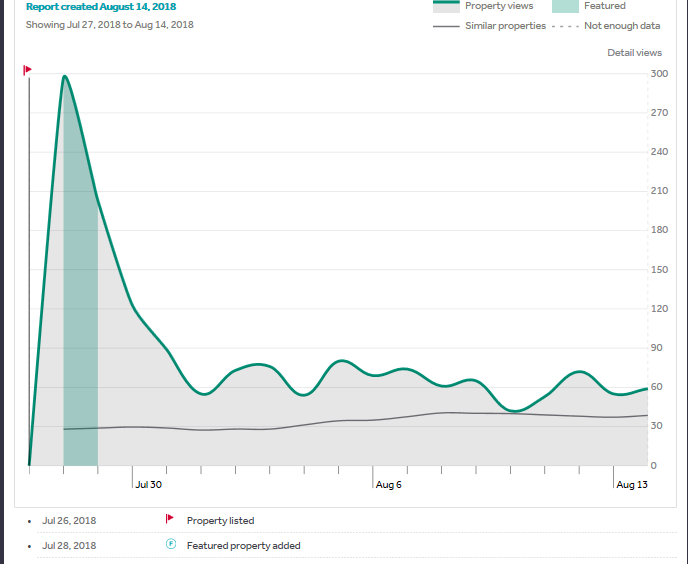
If your agent gets it right the launch of your property is the time you will attract the most buyers as demonstrated in the Rightmove activity chart below.
For more information and free advice on bringing your home to the market call your local branch of Perry Bishop and Chambers.
Author: twentytwo
Viewings are crucial to selling your home. Every viewing is a potential sale. Even if the viewer decides not to make an offer, they are a source of excellent and bespoke market research on your property when asked the right questions. So how did they think your home compared to the others that they have viewed? (Bigger, smaller, in better condition, worse condition, well priced, overpriced etc?) The chances are they would not feel comfortable sharing this feedback with you, the owner, for fear of offending you. However they will open up to your agent without fear of offending!
Some clients think they would be best at showing the house. After all, they know the ins and outs of their home, what work they have done, when it was done etc and in most cases who their neighbours are. But so do we! We ask you a list of questions when we are preparing your property for sale, the most common and obvious questions that our buyers will ask Where is the boiler? When was it last serviced? What is the council tax band? Rights of way, guarantees, covenants, etc.
Buyers will be more relaxed in your home when accompanied by our trained customer managers and viewing negotiators, all of whom are trained by us to the highest standard. They will spend more time in each room, and will be able to converse with each other to discuss what they like, don’t like and give us the opportunity to overcome their objections. Perhaps the kitchen is too small, but they have not thought about knocking through and combining the dining room or nearby space. Not enough storage and they will not be parking the car in the garage? The solution may be to pinch a section of the garage to bring back into the house and leave the remainder as storage for bicycles, lawn mowers and tools. These conversations are less likely to take place with you present. They don’t want you to know that your home does not work for them, or that they don’t like it!
Our teams are trained to spot buying signals as well as objections. They will be pointing out the positive aspects of your home and location, informing your viewers of the local schools, transport links and amenities and selling the benefits of your village, street, or town because like you, they are locals! We sell the area as well as your home.
Occasionally it helps for you to be at home for a second viewing, particularly if your home is unique or unusual. By this stage your property has been shortlisted, and might even be at the top of the list. Let the agent spend the first twenty minutes or so with the buyers and then join them when they have finished looking around.
Please get in touch with your local branch of Perry Bishop and Chambers if you would like us to show your home.