
Category: General
Directors Phillip Bishop, Sarah Benson and Gavin Wallace were thrilled to learn that Perry Bishop and Chambers was judged one of the best estate agencies in the country at the prestigious Best Estate Agent Guide Awards in London on Thursday 10th October.
The Best Estate Agent Guide, compiled annually by The Property Academy and Rightmove, is the largest and most comprehensive study of the British estate agency industry. Only 5% of the UK’s 25,000 estate agents are shortlisted and then only the top 3% go on to receive an award. Perry Bishop and Chambers were recognised for their achievement in the South West.
“We are so proud to have collected this award on behalf of our amazing teams. This would not have been possible without them,” said Managing Director Phillip Bishop.
The Best Estate Agent Guide (BEAG) seeks to raise industry standards by identifying and rewarding those agents that deliver extraordinary results for their customers.
The Best Estate Agent Guide is the result of a whole of market assessment of estate agency and lettings agency branches, combining Rightmove’s data with independent mystery shopping from the Property Academy (the organisation that provides Information, Insight, Ideas and Inspiration for individuals and companies in the property industry).
Category: General
Nick Haines from Hazlewoods, a Gloucestershire-based firm of Business Advisers and Chartered Accountants, tackles this question commonly posed by property developers and investors.
“At the end of the day it comes down to intention. What are your plans for this property? Do you intend to develop it to sell in the near future, with a view to making a profit or hold on to it long term to generate a rental income and/or for capital appreciation?,” explains Nick Haines, head of Hazlewoods tax and property teams. “If the former then it is trading, the latter, it is an investment.”
The UK accounting standard FRS 102 defines ‘investment property’ as:
Property (land or a building, part of a building, or both) held by the owner, or by the lessee under a finance lease, to earn rentals or for capital appreciation or both, rather than for:
1. use in the production or supply of goods or services, or for administrative purposes; or
2. sale in the ordinary course of business.
If you are developing property for resale, with the intention to retain part of the development as a long-term investment, make that decision at the outset, identify those properties for retention and always document your intention.

It is important to get this right from the start, changing your mind somewhere down the line can have significant tax consequences. We understand that this cannot always be avoided but please be aware of the tax implications of doing so.
From an accounting perspective, properties held for development and re-sale should be shown as development ‘stock and work in progress’. However, if the property is held for investment, include it in your list of fixed assets. At each year-end, investment property is reported at its ‘fair value’ (this is the amount for which the property could be sold, between willing parties in an arm’s length transaction). If the fair value of the property cannot be reliably measured without undue cost or effort to the company, an exemption is available, and the property is reported at cost. However, please note that, for periods beginning on or after 1 January 2019, this exemption has been withdrawn from the legislation leaving companies with the annual challenge of determining the fair value of investment property.
Category: General
This year’s annual Houzz & Home UK survey has its focus firmly on renovations* – and no wonder, since 46 percent of renovating homeowners are doing or planning work on their homes in 2019.
Beyond that, though, what sorts of homes do you live in and what kinds of changes are you making to them – and why? Are your renovations mainly functional or decorative? Are they to increase your home’s value, make them more sustainable – or fill them with smart technology so they function seamlessly? Read on to find out.
* Unless otherwise specified, all results are based on homeowners who renovated their primary homes in 2018 and responded to the Houzz & Home UK survey.
You want a home that makes you happy
With so many uncertainties in the ether affecting our big decisions right now, perhaps it’s no surprise to learn that your reasons for renovating are currently more about being happy in your homes than making money.
When asked to rate deciding factors for home improvements, 75 percent of you said you wanted to improve the design, look and feel of your home, while just 38 percent said you were motivated by increasing the resale value.
You love a refresh
You’re doing more decorating, furnishing and renovating than you are repairing: a substantial 57 percent of you are planning to decorate this year, while only 28 percent aim to carry out repairs.
Many of you have been waiting a while to get cracking: 33 and 35 percent of you respectively are doing work on your homes now because you finally have the time or the money to do so.
Interestingly, smart tech isn’t currently on your radar, with just 13 percent of you saying integrating it into your homes is a priority.
You tend to favour older properties
That so few of us are repairing our homes is perhaps a little surprising, given that the survey reveals a large number of you (22 percent) live in homes built before 1901.
The next most common home (17 percent) falls into the 1961-1980 bracket, closely followed by properties built between 1921 and 1940 (16 percent). Just 4 percent of us live in homes built after 2011.
You’re getting greener
We’ve already talked about how improving the look and feel of your homes is the number one motivation for undertaking projects on them.
Not too far down the list, however, is the desire to improve energy efficiency – with 40 percent of respondents stating that this is a motivation, and 15 percent wanting to integrate green materials. Improving functionality is also a big push and 63 percent rate this as a deciding factor.
Budget is a common bugbear
First up, isn’t it good to know you’re not the only one who’s faced challenges while completing work on a home? But what were the top challenges reported by homeowners during home renovations?
Joint number one, with both challenges felt by 36 percent of respondents, was staying on budget and finding the right professional.
Eating and sleeping matter most
It might surprise you to learn that the joint most popular room to work on is the bedroom. (Could a sanctuary theme be emerging?)
Perhaps less of a surprise, as this tends to be such a hard-working room, is that neck and neck with the bedroom as the most popular room to renovate is the kitchen.
Whether you were working on one room or several, 29 percent of you revamped your kitchen and 29 percent your bedroom, with the bathroom and living room coming a very close joint third at 28 percent apiece.
You’re willing to take on nuts and bolts projects
Improving functionality, as already mentioned, is a key push to undertake a project. But what sorts of practical upgrades are you investing in?
1. Indoors, 45 and 42 percent of you respectively upgraded heating and plumbing in your homes in 2018, while 40 percent focused on electrical works.
2. Outside, 32 percent of you upgraded your windows or skylights. 29 percent of you improved your gutters and downpipes, and 28 percent pimped your exterior doors.
3. In terms of the top outdoor feature upgrades in 2018, you might be surprised to discover that, at 28 percent, sprucing up your beds and borders was top of your projects list. Fencing was there, but trailing a little behind at 25 percent, while upgrading patios or terraces came in at 24 percent.
Category: General
We were delighted when Clive Parkhurst registered with us to help him and his wife find their next home. Rather than simply list their requirements, he sent in this lovely poem encompassing everything on their wish list.
In the spirit of the Cheltenham Literature Festival, which starts next month, we thought it would be nice to share his poem. If you think you have something that ticks all the boxes for Clive do let our Cirencester office know (tel. 01285 655355).
We’re in our 50s, with kids all gone
Noise and mayhem, there is now none!
Peace and quiet is what we seek
A rural idyll, our country retreat.
A house with charm and character abound
With views across our fair English land.
A village location with Ye Olde World pub
The heart of the community, a real hub!
Currently in rented, we’re set to pounce
On a cottage that makes our heart dance!
450K is our maximum spend
For perfection, a little we might just bend.
Give us a good-sized lounge with an inglenook fire
Something romantic, to warm and inspire.
A bathroom and a half is our request
Two bedrooms at least will suit us the best.
We still have to work to pay our way
Parking for two cars, if we may!
Within 25 miles of GL1
You’ll find that’s our wishes, now all done.
You’re the professionals we all come to
To make our property dreams come true.
Give us a call if you’re able to find
That perfect home we have in mind!
Category: General
As a buyer looking for a new place to live, you may well be keen to find property with potential – after all, our homes are an investment. But how do you go about doing this?
Property portal Zoopla provides some helpful pointers for spotting opportunities where you can add value:
Home extensions
Extending property is a great way of adding value in a tried and tested manner, so keep an eye out for a home which can be built out.
Many Victorian and Edwardian terraced houses have a side return – a dark and often under-used strip of garden. This can be a great area to extend into, to create a bigger and highly-desirable kitchen.
Also look for properties with a nearby outhouse which can be joined up by a link extension.
Don’t forget to look up and down too, as there may be space for a loft or basement conversion.
Homes where you can add a storey
If a property already has a single-storey extension, look at whether there’s scope for adding another storey.
This could give you space for an additional bedroom and bathroom – one of the most effective ways to boost your property’s value.
Do some research during your viewing to see if any of the neighbours have done something similar, as this could set a helpful precedent.
Also seek expert advice from a builder on whether the existing extension is strong enough to support a second storey.
Homes on plots that can be extended
Don’t be too quick to dismiss a home where the plot is too small for the size of property. Check out the possibility of purchasing adjacent land.
If you are able to do so, this could mean a dramatic increase in the value of the property.
Also note that small homes on bigger plots have lots of opportunities for improvement.
Homes where you can create open-plan living
Building an open-plan kitchen-living room is a highly desirable way of adding value to your home, so look out for places with a small kitchen that is beside a large dining room or living room.
Do a bit of detective work right away to work out whether the wall is internal or load-bearing. It will cost more to remove the wall, as structural support will be needed to replace it, if it is load-bearing.
If in doubt, arrange a visit with a surveyor or structural engineer.
Homes where you can improve layout
Spend time scouring the floor plan to see what changes can be made. A badly laid out property that can be re-configured can offer potential.
Homes that require new kitchens and bathrooms
Pay close attention to homes which need the kitchen and bathroom ripping out and starting again. They are two of the most valuable rooms in a property.
A brand new kitchen with the latest mod cons and oodles of storage, or a sparkling new bathroom suite with flashy taps, power shower and glass screen could add some serious extra value onto your home.
Homes where you can add a downstairs toilet
A property where you can install a ground floor WC can offer decent potential – and will appeal, in particular, to those with young children, people who like to entertain, as well as older couples who may struggle with stairs.
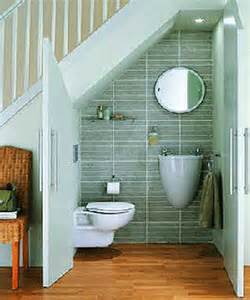
Think as creatively as you can, as you may not need to knock down walls or build an extension to fit a downstairs toilet into the property. You may be able to fit one in in a large cupboard, in a space under the stairs, or by siphoning off a portion of a room.
Ugly homes
While an ugly home can be a turn-off at first sight, it’s worth looking beyond initial impressions to see if the place can be given a facelift – and especially if the property is in a good location.
A ‘good’ location could mean, for example, it is an area known for its good schools or transport links.
You may be able to make some relatively simple cosmetic changes to an ugly property, such as new windows, painting, cladding – and planting climbing plants. All these steps can make a dramatic difference.
Homes that are close to the road
Many buyers will turn their backs on a property that suffers from being too close to a road. But there are steps you can take to improve things in terms of looks and noise, such as good screening and a change of approach.
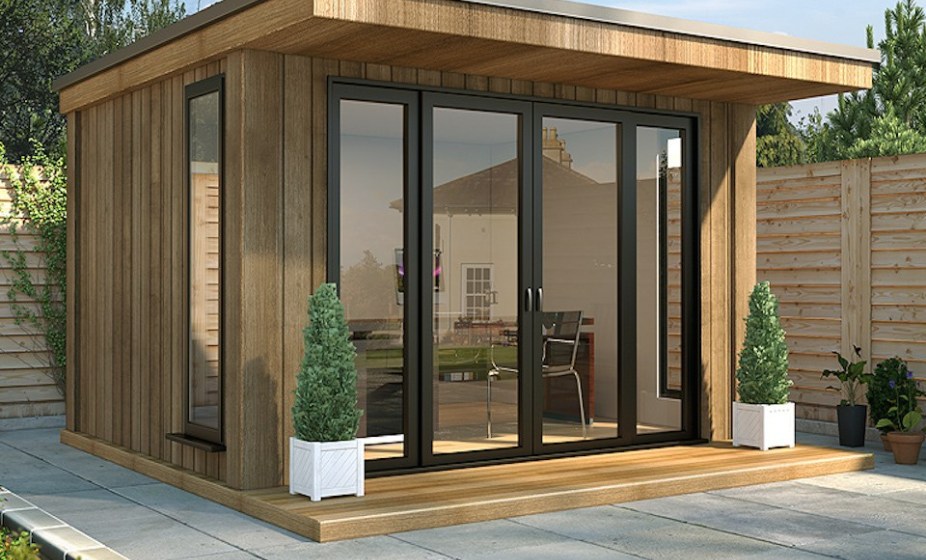 Homes with outside potential
Take a look outside to see if there is enough space for a garden room – which could be a great spot for a home office.
A self-contained structure can add value as it increases the usable floor space of the property.
A conservatory is another good way to increase the living or dining space – or make a kitchen more spacious.
But note that conservatories can make or break your home’s aesthetic. You need to plan carefully and make it seem the house was originally designed with the conservatory in mind.
Homes where you can restore old features
You can add real value to a property by restoring original features and taking good care of them – enhancing the charm and personality.
Spend some time looking at properties which have these features, such as wooden beams, old-fashioned fireplaces, floorboards, bannisters and doors – and especially if they haven’t been treated very sympathetically.
Homes that have a poor EPC
While you might view a home with a G-rated Energy Performance Certificate as a complete deal-breaker, you could also see these weaknesses as potential – as dramatic improvements can be made.
For example, you could upgrade the heating system, replace an old inefficient boiler with a modern condensing A-rated model, and install insulation, such as loft and cavity wall insulation. You could also make improvements, such as adding solar panels and ground/air source heat pumps. These changes will bring a property straight into the 21st century, and make a big difference to its value.
article courtesy of Zoopla.co.uk
Category: General
You’ve been bombarded by their ads on TV, but are there any real advantages of putting your largest asset in the hands of an online only agent provider? Recent research conducted by GetAgent concludes that in the long run you won’t necessarily save any money by appointing an online agent. It also highlights patchy service levels and poor sales progression by going down the online only route.

Before you decide, we summarise a few key considerations before reaching your decision as to whether you go down the online only route or appoint a local High Street agent.
1. Fees
Online only agents charge you a fee up front. On the surface this looks like a good deal and will surely save you money. Or will it? What incentive does the online only agent have to give you the best advice? How well do they know the local market? Many are covering a huge geographical area and will not know your local town or village the way you and your local high street agent will.
A traditional high street agent will not charge you for what they do until you exchange contracts with a buyer. No sale, no fee. It is in their interest to give you the best advice for your circumstances and this approach is far more likely to get you moved to suit your timescales and budget. The agent will work hard to earn their fee – if they don’t they risk all the marketing costs for no return and very few businesses can survive like this!
2. Local Knowledge

Your High Street agent will most likely be living locally and will know their local buyers who may only move for the ‘right property’. They will have a list of buyers who may not be actively searching, but would immediately spring into action when the perfect home comes to the market. They will have local knowledge and should be able to provide comparable evidence to support their advice on marketing price.
3. Accessibility
Online only agents often have to cover many miles and will be home based. Buying and selling property can be a time consuming and sometimes stressful process. At times like this it can be reassuring to visit and sit down with your agent and talk things through. They will take care of every stage of the selling process for you. Would you really want to deal with this yourself?
4. Finding your next home
Many high street agents have clients who are not ready for their property to be fully marketed but have instead opted for a discreet approach. By working with a local agent they will want you to be one of the first to know about these homes. Perhaps this method of ‘Low Key’ marketing will suit you and your circumstances.
If you live in Gloucestershire or The Vale of the White Horse and are considering appointing a High Street estate agent, call your local branch of Perry Bishop and Chambers – named Best Estate Agent in Gloucestershire and Oxfordshire by allAgents.co.uk, the tripadvisor for the property industry.